Bianca Schmitz · 7 October 2026
Lumenberg’s Public Markets Introduce Zero-Waste Shopping Practices
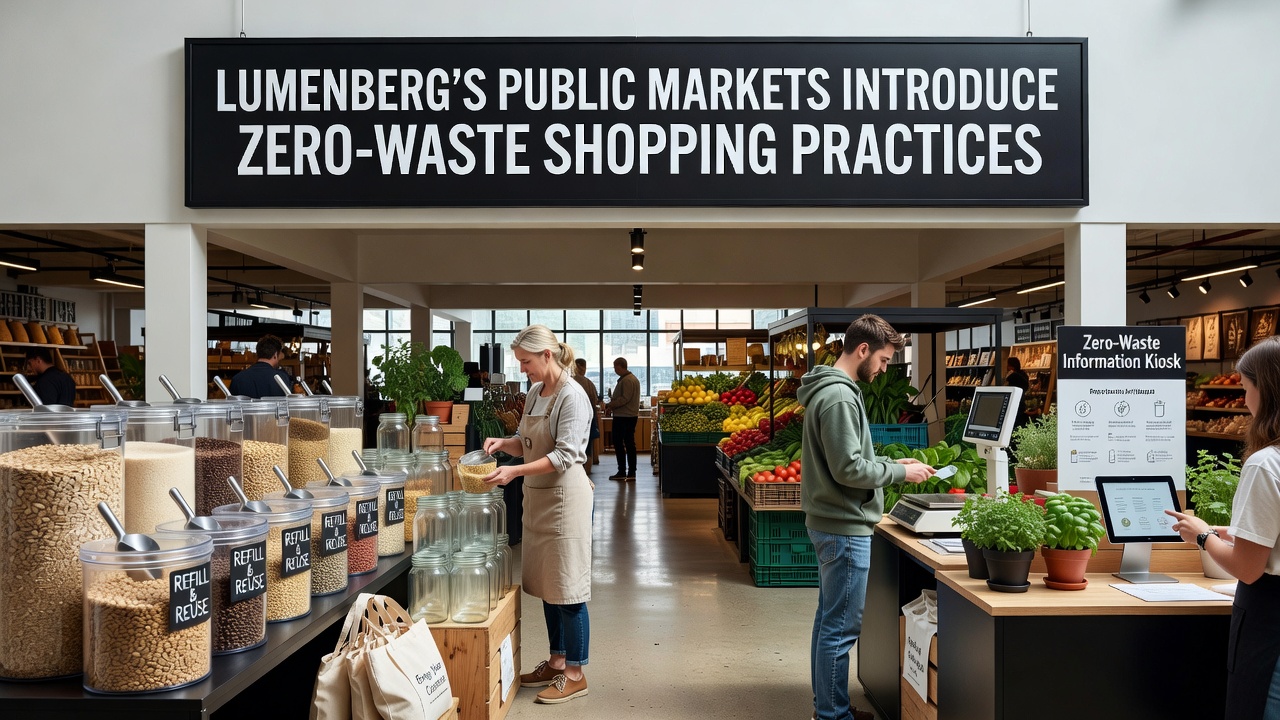
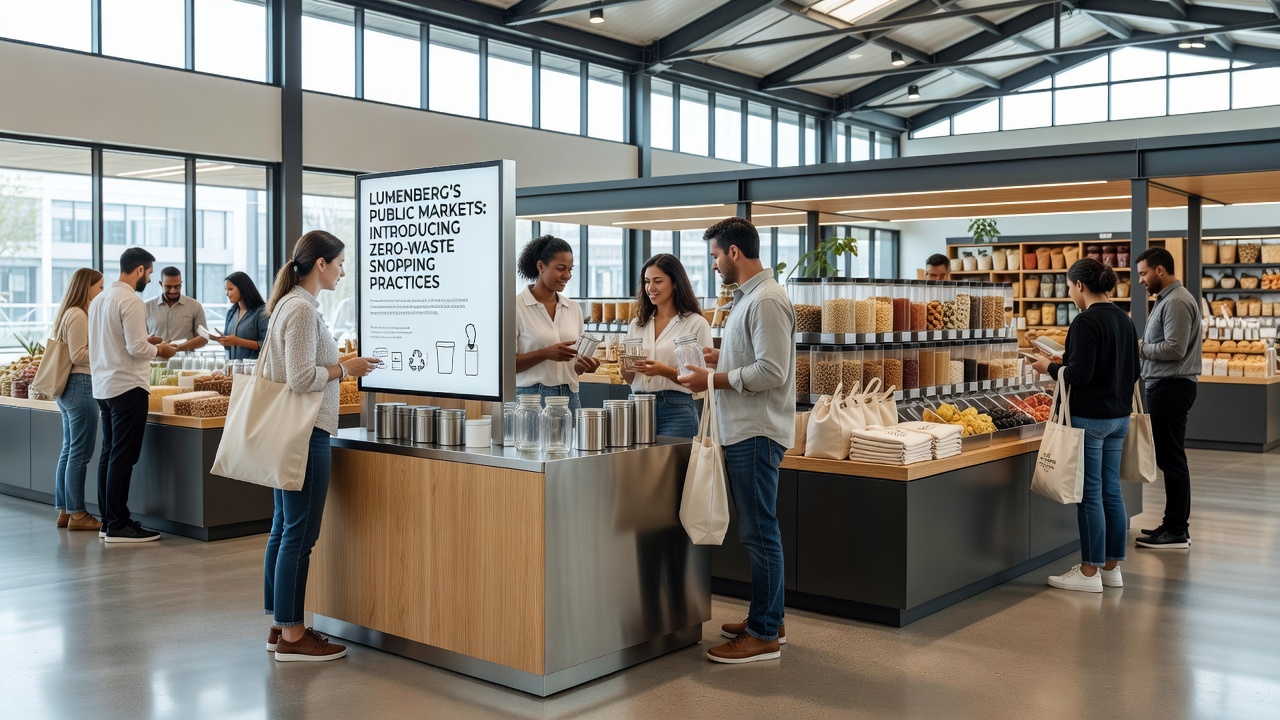
Public markets across Lumenberg began rolling out zero-waste shopping systems in October 2026, shifting away from single-use packaging toward bulk dispensing stations, customer-supplied containers, and on-site composting programs that handle organic scraps from stalls. These changes arrived after months of coordination between market operators, local suppliers, and municipal waste teams, resulting in new infrastructure such as gravity-fed silos for grains, oils, and spices alongside refill points for household cleaning products. Observers note that the transition required vendors to recalibrate inventory management while shoppers adjusted routines that once relied on pre-packaged goods.
Core Practices Implemented at the Markets
Each participating stall now maintains dedicated stations where dry goods flow from sealed hoppers into containers brought by visitors, eliminating the need for plastic bags or cardboard boxes at the point of sale. Liquid products sit in stainless-steel tanks fitted with pumps, allowing measured pours into glass or metal vessels that customers transport from home. Market management installed additional rinse stations near entrances so containers can be cleaned before use, and signs guide visitors through the process of weighing empty vessels before filling them to ensure accurate pricing. Compost collection points positioned at intervals collect vegetable trimmings and food scraps from both vendors and shoppers, diverting those materials to regional facilities that convert them into soil amendments used by nearby farms.
Participation Data and Operational Adjustments
Records kept by market administrators show that roughly sixty percent of regular vendors had converted their operations to the new model within the first month, while the remaining stalls received extended timelines to install compatible equipment. Shopper surveys conducted on-site revealed that repeat visitors arrived with an average of three containers per trip, and many reported coordinating purchases with neighbors to share larger bulk quantities. Data from the municipal environmental office indicates that landfill contributions from the markets dropped by forty-two percent during the initial quarter compared with the same period the previous year, a shift attributed to both reduced packaging waste and increased composting volumes. Vendors adjusted ordering schedules to receive goods in reusable crates rather than disposable pallets, cutting down on cardboard accumulation at loading docks.
Supply Chain and Regulatory Alignment
Local wholesalers adapted delivery methods to support the markets by switching to returnable totes and barrels that circulate between farms, processing facilities, and retail points. This closed-loop arrangement aligns with broader European standards for packaging reduction outlined in reports from the European Environment Agency, which track progress toward circular economy targets across member regions. Market organizers also referenced guidelines from Canadian provincial programs that emphasize source separation and material recovery, applying similar tracking methods to monitor contamination rates in compost streams. Staff training sessions covered proper handling of shared equipment to prevent cross-contamination between food and non-food bulk items, while signage in multiple languages explained container hygiene requirements to a diverse customer base.
Measured Outcomes and Ongoing Monitoring
Monthly waste audits performed by an independent contractor documented consistent declines in mixed refuse tonnage, alongside rising volumes of clean recyclables and compost feedstock. Energy consumption at the markets remained stable despite added equipment such as pumps and scales, because vendors consolidated operating hours and shared refrigeration units more efficiently. Community groups organized workshops demonstrating container cleaning techniques and bulk recipe adaptations, drawing steady attendance from residents who previously shopped at conventional supermarkets. Figures released by the city’s sustainability division project that continued adherence to these practices could divert an additional three hundred metric tons of material from landfills annually once full vendor participation is reached.
Conclusion
The zero-waste framework at Lumenberg’s public markets continues to evolve through quarterly reviews that incorporate feedback from vendors, shoppers, and waste handlers. Adjustments to container deposit systems and expanded product ranges in bulk format reflect ongoing refinements aimed at maintaining accessibility while sustaining material recovery rates. Coordination with regional composting facilities and packaging suppliers ensures the infrastructure remains functional as participation grows, establishing a model that other municipalities have begun to examine for potential replication.